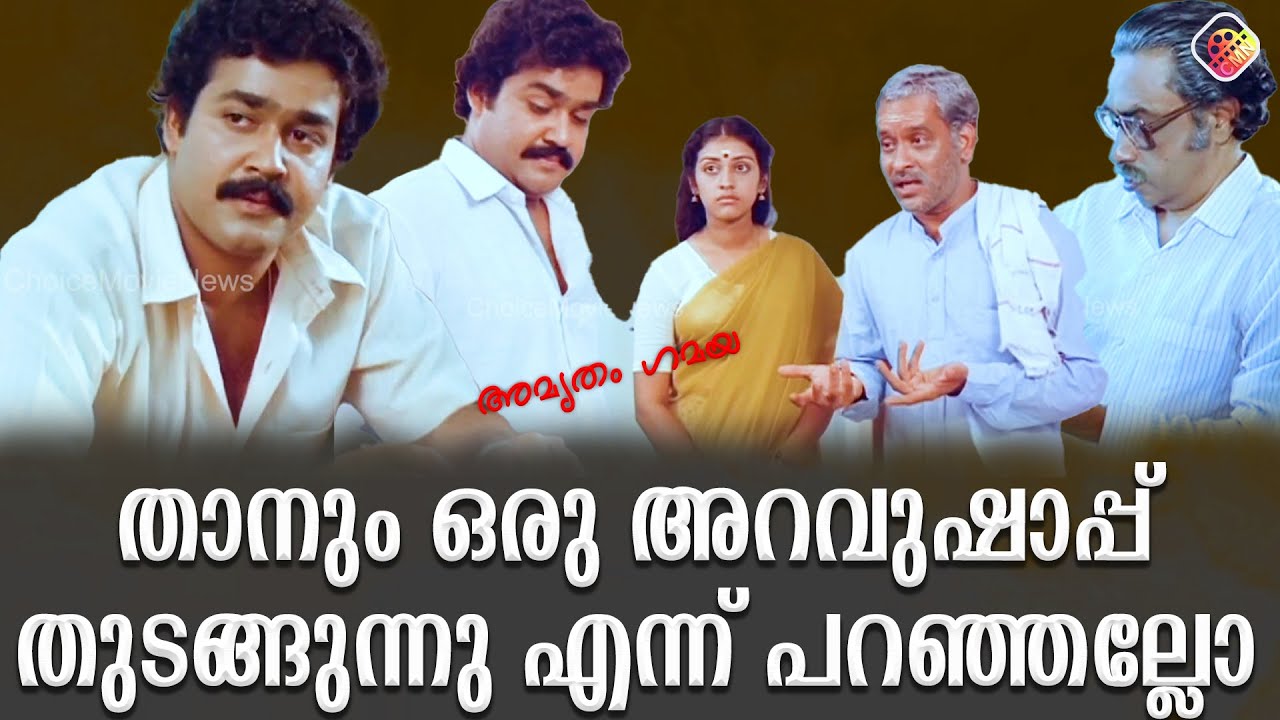
“Why Does He Act So Stingy to Write a Prescription?”: Unveiling the Conscience of a Doctor in Amrutham Gamaya
In the rich tapestry of Malayalam cinema, certain dialogues resonate across time, challenging societal norms and sparking introspection. One such dialogue comes from the classic film Amrutham Gamaya, penned by the legendary M.T. Vasudevan Nair and directed by Hariharan. The seemingly simple question, “മരുന്നെഴുതാൻ ഇവൻ എന്തിനാ പിശുക്ക് കാട്ടണേ?” (“Why does he act so stingy to write a prescription?”), becomes a powerful critique of the medical profession’s ethical landscape. At its heart lies the story of Dr. Haridas, a character who embodies the struggle between moral integrity and systemic corruption.
The ‘Stinginess’ of a Doctor: Integrity or Non-Cooperation?
In Amrutham Gamaya, Dr. Haridas, portrayed by Mohanlal, arrives at a rural hospital, only to be met with suspicion and criticism from colleagues and patients alike. This skepticism stems from his reluctance to prescribe unnecessary medications—a stark contrast to the profit-driven practices of his peers. In an environment where patients are often viewed as revenue streams, Haridas stands as a solitary beacon of ethical medical practice.
His colleagues perceive his principled approach as a lack of cooperation, labeling him ‘stingy’ for refusing to endorse the widespread malpractice of overprescription. This tension underscores the film’s central theme: the conflict between commercial interests and genuine patient care. Dr. Haridas’s so-called ‘stinginess’ is, in reality, a testament to his unwavering commitment to medical ethics. His actions reflect the voice of a conscience dedicated solely to the well-being of patients, yet in a system riddled with corruption, even integrity is misconstrued as a fault.
The Burden of the Past and the Quest for Redemption
Dr. Haridas’s steadfast adherence to ethical principles is deeply rooted in a haunting past mistake. Haunted by the guilt of a tragic error, he seeks redemption through sincere and ethical service. This personal journey of atonement drives his every interaction with patients, compelling him to avoid any semblance of past errors. Haridas’s internal struggle adds depth to his character, illustrating how a doctor’s moral compass can be both a guiding light and a source of isolation.
His refusal to succumb to external pressures or temptations highlights a profound internal conflict, one that is emblematic of a broader societal challenge. In a world where ethical boundaries are often blurred by financial incentives, Haridas’s journey underscores the importance of maintaining one’s moral integrity, even at great personal cost.
Exposing the Decay of the System
The question, “Why does he act so stingy to write a prescription?” transcends individual criticism, serving instead as a lens through which the film exposes the systemic decay within the medical field. It sheds light on the pervasive issues of medical negligence, corruption, and unethical behavior that have taken root in the profession. In an industry where commercial interests often overshadow genuine care, the film poignantly illustrates how those who strive to uphold ethical standards are frequently marginalized and misunderstood.
Through this narrative, Amrutham Gamaya critiques a world where moral principles are in constant conflict with prevailing corrupt practices. It challenges viewers to reflect on the societal values that prioritize profit over people, urging a reevaluation of what it means to be truly ethical in a profession dedicated to healing.
The Critical Moment of Criticism
The criticism directed at Dr. Haridas in the film is more than just a pivotal moment; it encapsulates the broader conflict between personal ethics and societal decay. This dialogue serves as a reminder of the enduring relevance of ethical considerations in the medical field. It calls into question the motivations behind medical decisions and highlights the importance of prioritizing patient welfare over financial gain.
In essence, the dialogue from Amrutham Gamaya is not merely a cinematic moment but a timeless reminder of the ethical responsibilities inherent in the medical profession. It challenges both practitioners and society to uphold the highest standards of integrity, even in the face of systemic challenges.
Lessons from Amrutham Gamaya: Upholding Medical Ethics
The film Amrutham Gamaya offers valuable lessons on the importance of maintaining ethical standards in medicine. Here are some key takeaways:
-
Prioritize Patient Welfare: The film underscores the importance of placing patient health above financial incentives. Dr. Haridas’s approach serves as a model for ethical medical practice.
-
Resist Corrupt Practices: In an environment where unethical behavior is rampant, the film advocates for resistance against corrupt practices, highlighting the need for integrity in the profession.
-
Seek Redemption Through Service: Dr. Haridas’s journey illustrates the power of sincere service as a path to redemption, emphasizing the transformative potential of ethical conduct.
-
Challenge Systemic Decay: By exposing the flaws within the medical system, the film encourages viewers to question and challenge the status quo, advocating for systemic reform.
-
Value Ethical Courage: The film celebrates the courage required to uphold ethical standards in the face of adversity, inspiring practitioners to remain steadfast in their moral convictions.
Conclusion: A Call for Ethical Reflection
Amrutham Gamaya remains a poignant exploration of the ethical dilemmas faced by medical professionals. Through the character of Dr. Haridas, the film challenges viewers to reflect on the moral responsibilities of those entrusted with the care of others. It calls for a renewed commitment to ethical principles, urging both individuals and institutions to prioritize integrity over profit. In doing so, the film serves as a timeless reminder of the enduring importance of ethics in the medical field, encouraging a shift towards a more compassionate and principled approach to healthcare.