Chakyar Koothu: Kerala’s Timeless Tradition of Storytelling and Satire
In the heart of Kerala, India, a unique art form has captivated audiences for centuries. Chakyar Koothu, a classical solo performance art, seamlessly weaves together the sacred narratives of Hindu mythology with sharp, contemporary social commentary. This ancient tradition, rich in cultural and religious significance, continues to evolve, finding new expressions and audiences in the modern world.
The Historical Roots of Chakyar Koothu
A Glimpse into the Past
Chakyar Koothu’s origins can be traced back to at least the 9th century, rooted deeply in the traditions of ancient Sanskrit theatre. Historically, this art form was an exclusive ritual, performed solely within the sacred confines of Hindu temples. These performances took place in specially constructed theatres known as Koothambalam, which were not just stages, but hallowed spaces where mythology was brought to life.
The Chakyar Community: Custodians of Tradition
For generations, the right to perform Chakyar Koothu was reserved for the men of the Chakyar community, a priestly caste. This exclusivity underscored the performance’s sacred nature, intended for a devout audience that appreciated both its spiritual and artistic dimensions. The performer, known as a Chakyar, was more than an entertainer; he was a storyteller, a commentator, and a keeper of cultural heritage.
The Unique Performance Style of Chakyar Koothu
The Art of the Solo Performer
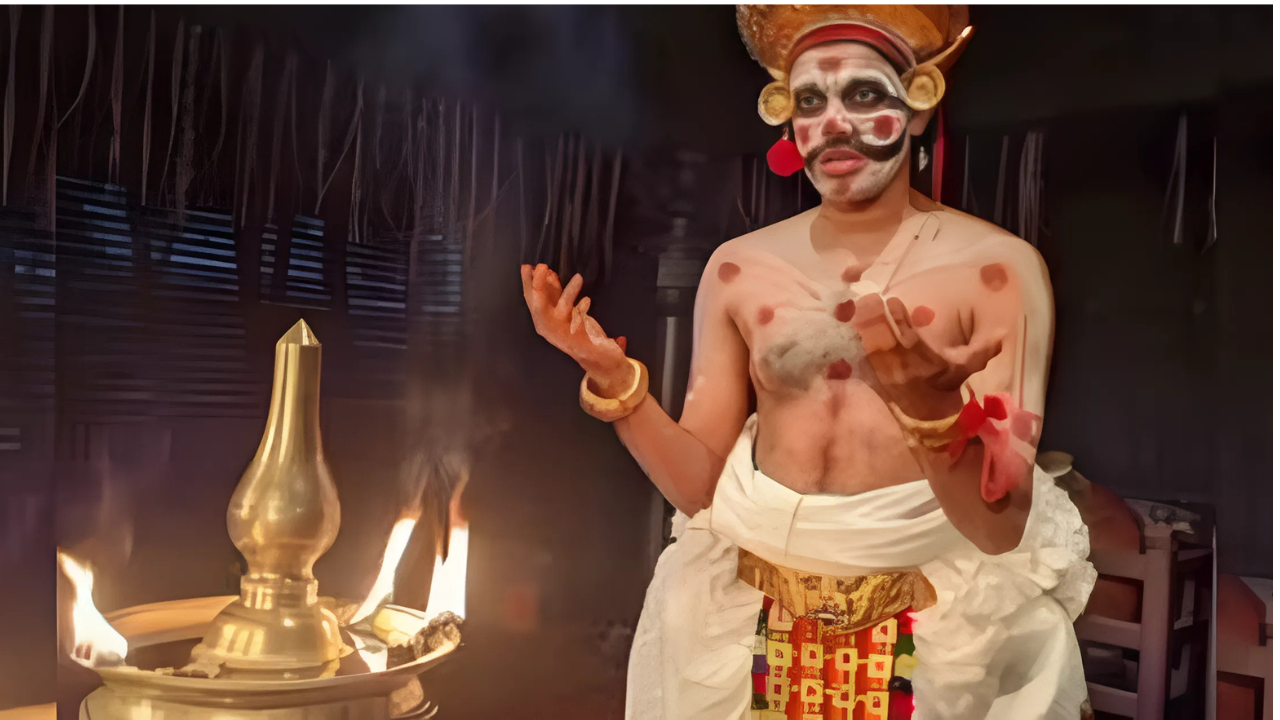
The magic of Chakyar Koothu lies in its distinctive solo performance style. The Chakyar, adorned in elaborate costumes with brightly colored headgear, a large black moustache, and intricate facial markings, commands the stage. His attire is not merely decorative; it enhances his expressions and adds to the theatricality of the performance.
Storytelling Through Expression and Satire
Accompanied by the rhythmic beats of percussion instruments, the Chakyar delivers monologues that draw from the rich tapestry of Hindu epics like the Ramayana and Mahabharata. These narratives are presented through a blend of prose, poetry, and expressive mimetic acting. However, what truly sets Chakyar Koothu apart is its use of satire. The performer cleverly incorporates contemporary social and political commentary, often referencing current events and gently mocking societal norms. This blend of ancient tales with modern critique creates a performance that is both entertaining and thought-provoking.
Chakyar Koothu in the Modern Era
Breaking Traditional Barriers
While Chakyar Koothu has its roots in tradition, it has shown remarkable adaptability. No longer confined to temple walls, it now graces cultural festivals, weddings, and even church functions, reflecting its growing secular appeal. This evolution has been accompanied by a breaking down of traditional barriers. The art form, once restricted by caste and gender, is now more inclusive. Visionary troupes like Ammannur Gurukulam have played a pivotal role in training new generations of performers from diverse backgrounds, including women, who bring fresh perspectives to the ancient art.
Challenges and Opportunities
Despite its evolution, Chakyar Koothu faces challenges. The art form grapples with its caste-based history and the need to maintain its traditional audience in a rapidly changing world. However, educational initiatives and digital platforms are making it more accessible, helping to reach a global audience and ensuring its stories continue to resonate.
The Cultural Significance of Chakyar Koothu
More Than Mere Entertainment
At its core, Chakyar Koothu is more than just a performance. It serves as a medium for imparting moral and spiritual lessons. The humor and satire are not merely for entertainment; they are tools for social critique, encouraging audiences to reflect on societal norms and behaviors. By grounding its commentary in mythology, Chakyar Koothu maintains a profound sense of reverence, balancing laughter with lessons that resonate deeply with audiences.
The Enduring Legacy
The enduring appeal of Chakyar Koothu lies in its ability to adapt while staying true to its roots. It continues to speak truth to power, offering insights into human nature and societal dynamics. As it evolves, Chakyar Koothu remains a testament to the rich cultural heritage of Kerala, a tradition that bridges the past and present, inviting audiences to engage with its timeless stories and sharp social insights.
In conclusion, Chakyar Koothu stands as a vibrant testament to the power of storytelling. Its ability to blend ancient mythology with contemporary issues ensures its relevance in today’s world. As it continues to break barriers and reach new audiences, Chakyar Koothu remains a cherished cultural treasure, inspiring and entertaining generations with its unique blend of humor, critique, and tradition.