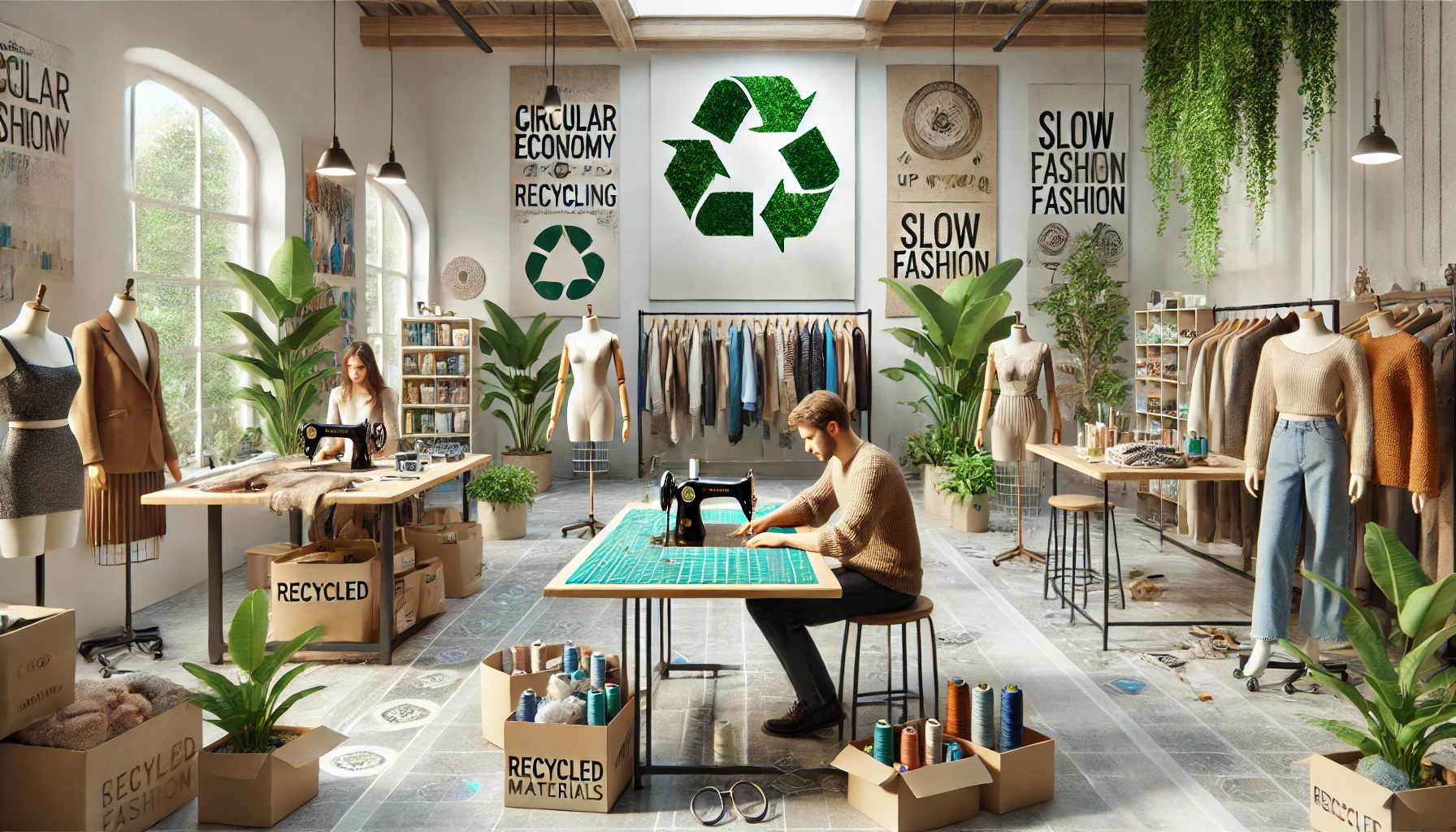
Beyond the Landfill: How the Circular Economy is Weaving a Sustainable Future for Fashion
For decades, the fashion industry has been driven by a straightforward, linear approach: extract resources, manufacture clothing, sell it, and eventually discard it. This “take-make-use-dispose” model has not only filled our wardrobes but also our landfills, contributing significantly to environmental degradation. However, a transformative alternative is emerging, promising to fundamentally reshape our relationship with fashion.
Enter sustainable fashion and the circular economy—two interlinked concepts aiming to carve a greener, more ethical path for the global textile industry. This shift isn’t merely about switching to organic cotton; it’s about reimagining a garment’s entire lifecycle, from the designer’s initial sketch to its final thread.
What is the Circular Economy in Fashion?
At its core, the circular economy stands in stark contrast to the traditional linear model that has long dominated the fashion world. Instead of a one-way journey to the landfill, it fosters a continuous loop where clothing, textiles, and materials remain in use for as long as possible.
This approach, known as circular fashion, applies these principles directly to our wardrobes. The primary aim is to extend the lifespan of every product and material, significantly reducing waste and pollution. This is achieved through a variety of practices that are becoming increasingly mainstream:
- Sharing and Leasing: Subscription services allow consumers to rent outfits for special occasions or everyday wear, reducing the need for new purchases.
- Reusing and Repairing: A growing culture of mending clothes, along with brands offering repair services, extends a garment’s usefulness.
- Refurbishing and Recycling: Old garments are cleaned or remade for resale, or broken down into fibers to create new textiles.
By prioritizing these actions, the circular model ensures that products and the resources used to create them maintain their value, creating a closed-loop system that significantly reduces the industry’s carbon and water footprints.
Designing for Durability, Not Disposal
This innovative approach begins long before a garment ever reaches a hanger. In a circular system, clothes are designed from the outset with their entire lifecycle in mind, focusing on durability, reparability, and recyclability.
Producers are increasingly opting for sustainable and renewable materials that are less resource-intensive. Simultaneously, they are adopting eco-friendly production processes to minimize environmental impact. These tangible changes include reducing water consumption, eliminating harmful chemical pollution, and lowering greenhouse gas emissions during manufacturing. The goal is to create high-quality clothing built to last, that can be easily repaired, and, at the end of its life, can be efficiently recycled back into the system.
More Than Just Materials: The Ethical Foundation
Sustainable fashion is not solely about environmental impact; it also addresses ethical concerns. A key pillar of this movement is tackling the industry’s longstanding ethical issues. This involves a serious commitment to:
- Fair labor practices that ensure workers are treated with dignity and paid a living wage.
- Transparency in the supply chain, allowing consumers and companies to know where and how their clothes are being made.
- Accountability in production, holding brands responsible for their social and environmental impact.
This holistic view ensures that the quest for a greener planet goes hand-in-hand with creating a more socially responsible and equitable industry. The push for this change is not just coming from activists; it’s being formalized through major policy actions like the EU strategy for sustainable and circular textiles and championed by influential organizations like the Ellen MacArthur Foundation, which have helped define and accelerate the global shift.
The Road Ahead: Challenges on the Path to Circularity
While the vision is compelling, the path to a fully circular fashion industry is not without its hurdles. The transition presents several practical challenges that the industry is still working to solve.
Scaling up recycling technologies to handle complex blended fabrics remains a significant technical barrier. Furthermore, a truly circular system relies on a major shift in consumer behavior—moving away from the impulse of disposable fast fashion toward a mindset of investment, care, and reuse. Finally, there are economic barriers for designers and producers who face higher upfront costs for sustainable materials and new production models.
Some critics argue that while current corporate commitments and policies are a positive step, much more systemic change and bold innovation are required to achieve a large-scale impact. These points are widely acknowledged, highlighting that the journey is ongoing.
A New Relationship with Fashion
Ultimately, sustainable fashion and the circular economy offer more than just a new business model; they propose a new relationship with what we wear—one based on longevity, responsibility, and regeneration. It’s a pathway to a future where style and sustainability are seamlessly woven together.
As the fashion industry continues to evolve, embracing these principles could lead to a more sustainable and ethically responsible future, where the clothes we wear reflect not only our personal style but also our commitment to the planet and its people. By adopting a circular approach, the industry can reduce its environmental footprint, promote ethical labor practices, and create a more sustainable world for future generations.