The Timeless Tapestry of Kerala’s Dance Heritage: Exploring Koothu and Koodiyattam
Kerala, a state renowned for its lush landscapes and rich cultural tapestry, is home to some of India’s most ancient and distinctive performance traditions. Among these, Koodiyattam and Koothu/Chakyarkoothu stand out as monumental pillars, each contributing uniquely to the region’s artistic heritage. These forms are not merely historical; they are vibrant, living arts that continue to echo the stories of a bygone era while engaging with contemporary audiences.
Koodiyattam: The Ancient Ensemble of Sanskrit Theatre
A UNESCO-Recognized Masterpiece
Koodiyattam, hailed as one of the world’s oldest continuous performance traditions, is a testament to Kerala’s deep-rooted cultural legacy. Recognized by UNESCO as a Masterpiece of the Oral and Intangible Heritage of Humanity, this art form traces its origins back over 2,000 years, with some historical accounts pinpointing the 9th century CE as a significant period in its development.
The Art of Ensemble Performance
Unlike other theatrical forms, Koodiyattam is characterized by its ensemble nature. It brings together multiple actors to perform dramas derived from ancient Sanskrit texts. The performances are a grand spectacle, often unfolding over several nights, allowing each act to be thoroughly explored and expressed.
The Four-Fold Expression: Chaturvinatha Abhinaya
Central to Koodiyattam is the ancient acting system known as Chaturvinatha abhinaya, which encompasses:
- Action: Intricate hand gestures and body movements convey the narrative’s depth.
- Dialogue: Stylized vocal delivery brings the script to life.
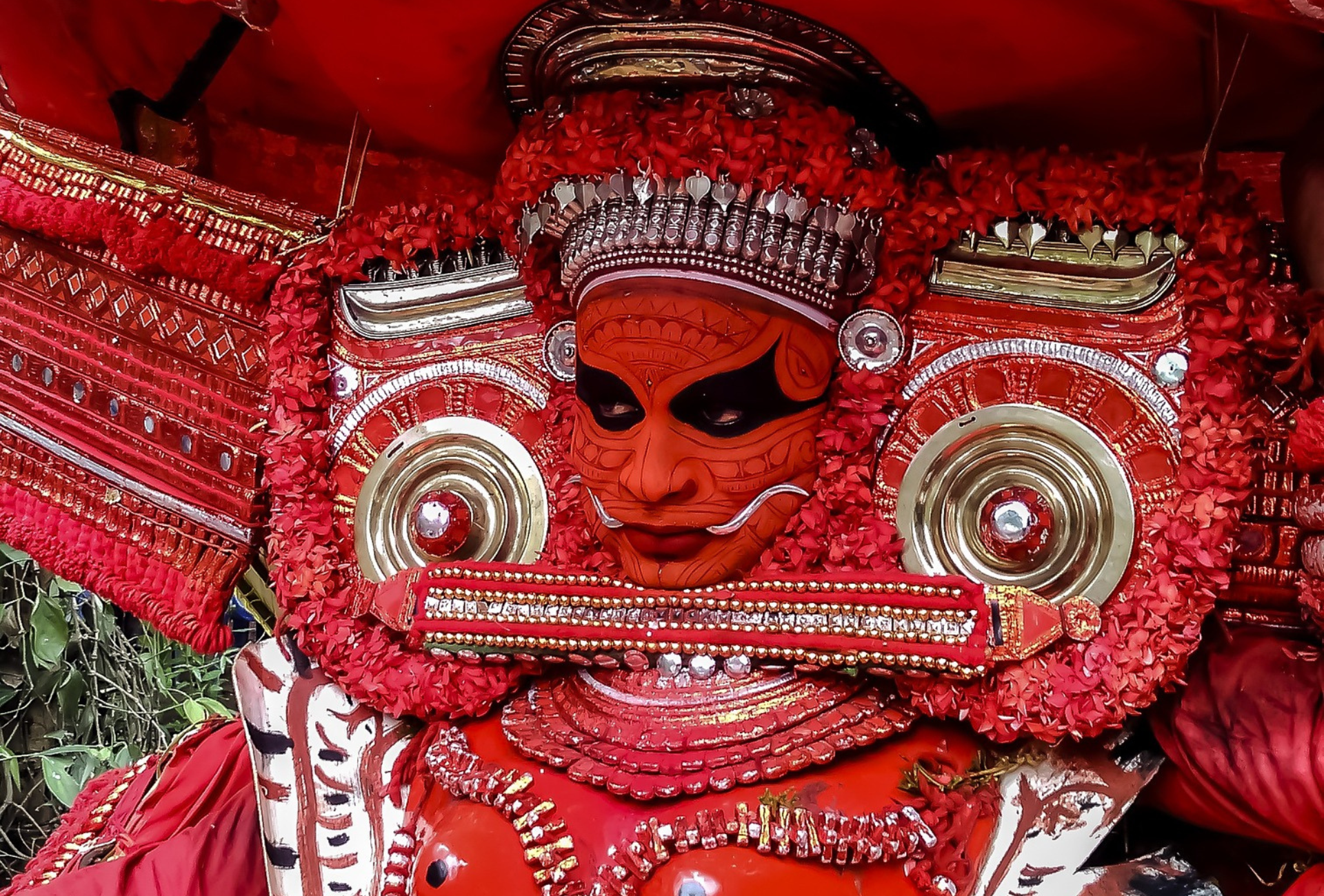
- Attire: Detailed costumes and symbolic makeup enhance the visual storytelling.
- Emotional Manifestation: Nuanced facial expressions convey the characters’ inner worlds.
Through these elements, Koodiyattam creates a rich tapestry of ritual, drama, and high art, making each performance a deeply immersive experience.
Chakyarkoothu: The Solo Performance with a Social Edge
The Art of the Chakyar
In stark contrast to the ensemble nature of Koodiyattam, Chakyarkoothu shines the spotlight on a single performer, the Chakyar. This solo Sanskrit theatre form is believed to have origins as ancient as Koodiyattam, forming a cornerstone of India’s performing arts.
Storytelling with a Twist
The Chakyar is not just a storyteller but a commentator on society. Drawing from the Hindu epics known as the Puranas, the performer weaves tales that resonate with both historical and contemporary relevance. The genius of Chakyarkoothu lies in its blend of sacred narrative with sharp-witted social and political commentary, often infused with humor that engages and entertains the audience.
Minimalism in Performance
Unlike the elaborate productions of Koodiyattam, Chakyarkoothu is minimalist in its approach. The focus is on the performer’s skill in mimicry, narrative, and interaction with the audience, with minimal costuming and musical accompaniment. This simplicity directs attention to the performer’s prowess and the story being told.
The Interwoven Legacy of Koodiyattam and Chakyarkoothu
A Syncretic Tradition
Though distinct in their execution, Koodiyattam and Chakyarkoothu share a common cultural lineage. They are products of a syncretic tradition that blends classical Sanskrit theatre with local Dravidian practices. This fusion has not only preserved these art forms but also allowed them to evolve and influence newer traditions.
The Birthplace of Kathakali
The influence of Koodiyattam and Chakyarkoothu extends beyond their own performances. They are foundational to the development of Kathakali, another iconic dance-drama form from Kerala. Kathakali adopted narrative and performance techniques from these ancient arts, creating a rich theatrical tradition that is celebrated worldwide.
Folk Variants: The Living Tradition of Koothu
Mannan Koothu: A Community’s Voice
The term “Koothu” extends beyond the classical stage, encompassing vibrant folk iterations in Kerala’s rural and tribal communities. One such variant is Mannan Koothu, a ritualistic dance-drama performed by the Mannan community. This folk form retains its unique oral traditions, separate from the formalized structures of Chakyarkoothu and Koodiyattam.
A Dynamic Cultural Expression
Mannan Koothu and other folk variants demonstrate the adaptability and resilience of the Koothu tradition. These performances are not static relics but dynamic expressions that evolve to meet the cultural needs of their communities. They recite mythic epics and tales significant to their audiences, ensuring that the tradition remains a vital part of community life.
Conclusion: The Enduring Legacy of Kerala’s Performance Arts
In the grand narrative of Indian performing arts, Koodiyattam and Koothu/Chakyarkoothu are not just historical footnotes but vibrant chapters that continue to inspire and engage. They represent the enduring soul of Kerala’s cultural heritage, captivating audiences with their profound storytelling, intricate performances, and deep connection to the past. As these art forms continue to thrive, they offer a timeless link to a rich and diverse cultural landscape that remains as relevant today as it was millennia ago.