Mohiniyattom: The Enchanting Dance of Kerala
In the tapestry of India’s diverse classical arts, Mohiniyattom stands out as a dance form that epitomizes grace, femininity, and storytelling. Originating from the lush landscapes of Kerala in South India, this dance is a mesmerizing blend of subtle charm and profound narratives. The name itself, derived from mohini (enchantress) and aattam (graceful dance), perfectly captures its essence as “the dance of the enchantress.”
The Mythical Origins of Mohiniyattom
A Dance Born from Divine Legends
To truly appreciate Mohiniyattom, one must delve into the mythological roots that give it depth and character. The dance is intimately linked with Hindu mythology, particularly the tale of Lord Vishnu. In this legend, Vishnu transforms into Mohini, an enchantress of unparalleled beauty, to deceive the demons and secure the elixir of immortality for the gods. This story is not merely a backdrop; it is the heartbeat of Mohiniyattom, infusing the dance with themes of divine allure, elegance, and subtle power.
Themes of Love and Devotion
The performances often revolve around themes of love and devotion, drawing inspiration from the enchanting stories of Mohini. These narratives are woven into the dance, allowing the performer to convey deep emotions and spiritual devotion through every movement.
The Unique Style of Mohiniyattom
A Dance of Subtle Elegance
What distinguishes Mohiniyattom from other classical Indian dances is its emphasis on gentle, feminine movements. The dance is characterized by the graceful swaying of the upper body, which moves in a fluid, circular motion reminiscent of flowing water. The dancer maintains a stance similar to a plié, providing a stable yet elegant foundation.
Expressive Gestures and Movements
The storytelling in Mohiniyattom is achieved not through vigorous movements but through a refined language of flowing hand gestures and subtle eye expressions. Each glance, each bend of the finger, is intentional and meaningful, contributing to a performance that is understated yet powerfully emotive. It is a dance where elegance and charm speak louder than force.
The Visual and Musical Harmony
The Iconic Costume and Adornments
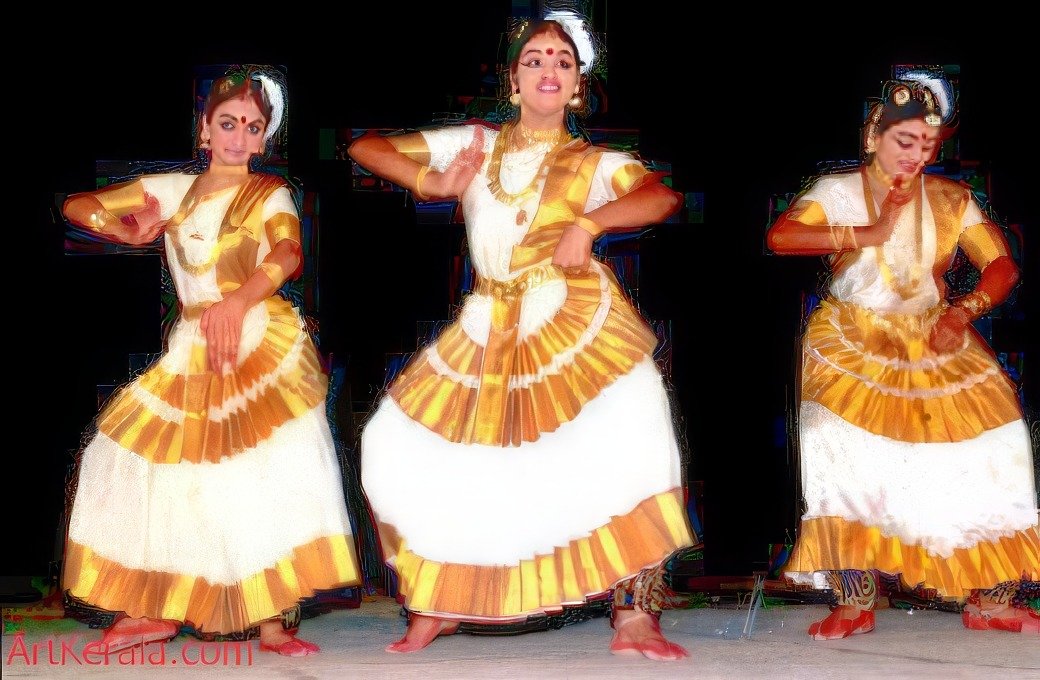
A Mohiniyattom performance is as much a visual delight as it is a narrative journey. Dancers don an off-white or cream sari with a shimmering golden border known as kasavu. This ensemble is paired with a matching blouse, creating a look that is both simple and striking. Complementing this attire are ornate gold jewelry and a distinct hairstyle, where the hair is styled into a side bun adorned with jasmine flowers, enhancing the dancer’s ethereal presence.
The Melodic Accompaniment
The dance is set to the tunes of Carnatic music, the classical music tradition of South India. Lyrics are sung in Manipravalam, a fascinating blend of Sanskrit and Malayalam, the native tongue of Kerala. This musical tapestry is enriched by traditional instruments like the mridangam and idakka (drums), the flute, the veena (a stringed instrument), and hand cymbals, which together create a rhythmic and melodic backdrop for the dance.
The Historical Journey of Mohiniyattom
From Temple Rituals to Modern Stage
Mohiniyattom has a rich history that dates back to the Chera dynasty, spanning the 9th to 12th centuries CE. Initially performed by Devadasis (temple dancers), it was an integral part of temple rituals. Today, Mohiniyattom has evolved into a solo recital predominantly performed by women, maintaining its essence while adapting to contemporary stages.
The Structure of a Performance
A typical Mohiniyattom performance follows a structured sequence akin to other classical dance forms like Bharatanatyam. The recital begins with Cholkettu (an invocatory piece), progresses through Jatisvaram (pure dance without expressive content), reaches its emotional peak in Varnam (a combination of pure and expressive dance), explores deep storytelling in Padam, and culminates in Tillana (a rhythmic, climactic finale). This progression ensures a holistic artistic and spiritual experience for both the performer and the audience.
The Timeless Charm of Mohiniyattom
In its entirety, Mohiniyattom is a celebration of simplicity and elegance. Its beauty lies not in intricate complexity but in the seamless fusion of flowing movements, rich cultural symbolism, and striking visual purity. As one of the most enchanting classical traditions of India, Mohiniyattom continues to captivate audiences with its timeless grace and profound storytelling, making it a cherished jewel in the crown of South India’s artistic heritage.
By exploring the enchanting world of Mohiniyattom, one gains insight into a dance form that is as much about cultural pride as it is about artistic expression. Its enduring appeal lies in its ability to convey profound narratives through the delicate art of dance, making it a true testament to the rich cultural tapestry of Kerala and the broader Indian subcontinent.