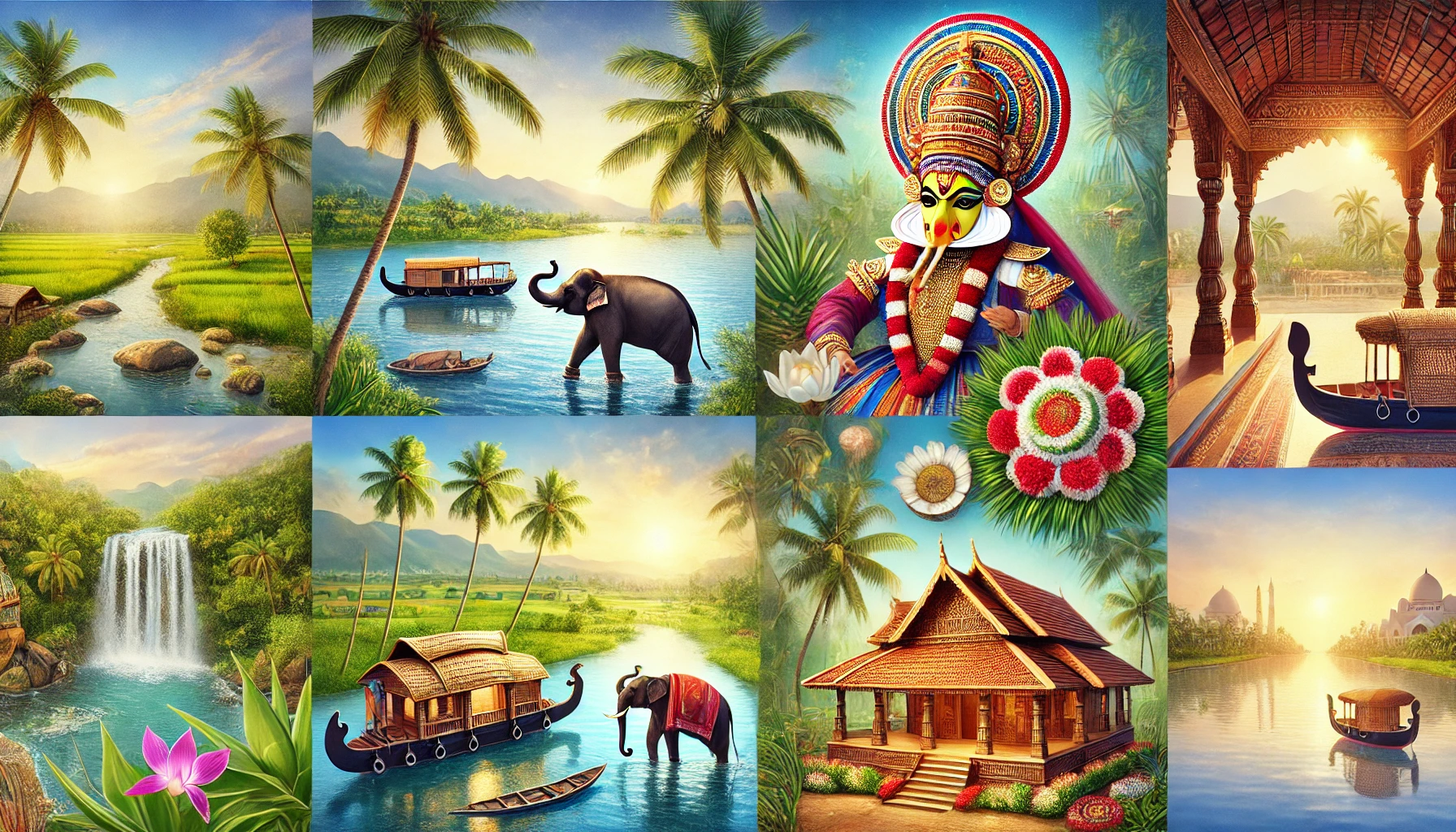
Kerala: Unveiling the Mystique of ‘God’s Own Country’
Kerala, a captivating state in southern India, is often celebrated as “God’s Own Country.” This evocative title conjures images of serene landscapes, lush greenery, and a harmonious cultural blend. But what is the story behind this heavenly designation? The answer lies in a fascinating blend of ancient mythology, a rich history of cultural harmony, and a stroke of modern marketing genius. What began as a tourism slogan is, in fact, deeply rooted in the very identity of the land and its people.
Mythological Origins: A Land Born from a Divine Axe
Long before tourism brochures existed, the origins of Kerala were explained through a powerful Hindu myth. According to legend, the land itself was a divine creation, brought forth from the sea by Parashurama, the sixth avatar of the god Vishnu. The story recounts that Parashurama, a warrior-sage, sought penance for his past deeds. He threw his mighty axe across the sea from the mountains, and in a display of divine power, the waters receded to reveal a fertile, crescent-shaped land. That land was Kerala, a territory quite literally carved out by a god. This foundational myth is central to the state’s identity, imbuing it with a sacredness that resonates to this day. It’s the original, and perhaps most profound, reason Kerala is considered a land specially touched by the gods.
A Tapestry of Faiths and Traditions
Beyond its mythological birth, Kerala’s claim to being a divine place is strengthened by its remarkable social fabric. The state is a celebrated example of religious pluralism, where Hindu, Christian, and Muslim communities have coexisted for centuries in notable harmony. This isn’t just an abstract idea; it’s written into the landscape. Majestic temples like the world-renowned Sabarimala shrine share the region with historic churches, such as the St. Francis Church in Kochi—the original burial site of explorer Vasco da Gama. Prominent mosques also stand as vital centers of community life. This peaceful coexistence and mutual respect among different faiths contribute to a unique cultural atmosphere, suggesting a land blessed with tolerance and understanding. This deep, pluralistic heritage adds a human dimension to the “God’s Own Country” narrative.
Key Religious Sites in Kerala
- Sabarimala Temple: A major pilgrimage site for Hindus, attracting millions of devotees annually.
- St. Francis Church, Kochi: Known as the first European church in India, marking the burial site of Vasco da Gama.
- Cheraman Juma Mosque: Believed to be the first mosque in India, symbolizing the longstanding Muslim presence in the region.
Nature’s Paradise on Earth
Of course, no description of Kerala is complete without paying homage to its breathtaking natural beauty. The state’s geography seems perfectly designed to inspire awe and reinforce its paradise-like reputation. From the tranquil backwaters—a labyrinthine network of lakes, canals, and lagoons—to the sprawling, emerald-green tea plantations and the rich biodiversity of its wildlife sanctuaries, Kerala is a feast for the senses. This stunning natural splendor provides the visual proof for the “God’s Own Country” claim. It’s a landscape that feels pristine and untouched, a place where nature’s grandeur is on full display, making it easy to believe it was shaped by a higher power.
Highlights of Kerala’s Natural Beauty
- Backwaters: A unique ecosystem of interconnected canals and lakes, perfect for houseboat cruises.
- Western Ghats: A UNESCO World Heritage site, home to a rich variety of flora and fauna.
- Munnar: Known for its rolling tea gardens and cool climate, offering a refreshing retreat.
The Making of a Modern Slogan
While myth, culture, and nature provided the foundation, the phrase “God’s Own Country” was officially catapulted onto the global stage by a clever marketing campaign. In the late 1980s, the Kerala Tourism Department sought a way to capture the state’s unique essence and present it to the world. Advertising professional Walter Mendez, head of the agency that won the tourism account, crafted the slogan. It was a strategic move designed to encapsulate Kerala’s divine origins, natural beauty, and rich heritage in one unforgettable phrase. The campaign was a resounding success, transforming Kerala into a premier international travel destination and embedding the slogan firmly in the public consciousness.
Why the Slogan Resonates
- Authenticity: The phrase was not just a marketing gimmick but a reflection of Kerala’s true essence.
- Cultural Richness: It highlights the harmonious coexistence of diverse communities.
- Natural Splendor: It underscores the breathtaking landscapes that define the region.
Conclusion: A Legacy of Divine Splendor
Kerala’s designation as “God’s Own Country” intertwines mythological tradition, historical coexistence of cultures, and natural splendor. What began as a tourism campaign slogan is firmly rooted in legendary stories and the remarkable realities of Kerala’s geography and multicultural society. This unique blend of myth, culture, and nature continues to captivate visitors from around the globe, ensuring that Kerala remains a cherished destination for those seeking both beauty and tranquility. As you explore this enchanting region, the divine allure of Kerala is unmistakable, offering a glimpse into a world where the sacred and the earthly coexist in perfect harmony.