Koodiyattam: The Timeless Dance-Drama of Kerala’s Ancient Temples
In the lush landscapes of Kerala, India, an ancient theatrical tradition continues to captivate audiences with its profound artistry and spiritual depth. Known as Koodiyattam, this classical dance-drama form is not just a performance but a living dialogue with history, echoing through the corridors of time for over 2,000 years. Recognized by UNESCO as a Masterpiece of the Oral and Intangible Heritage of Humanity, Koodiyattam is celebrated for its intricate gestures, resonant chants, and elaborate costumes, embodying a rich blend of drama, dance, music, and ritual.
Unraveling the Origins: A Journey Through Time
The Birthplace of Koodiyattam
Koodiyattam, meaning “acting together” in Sanskrit, is hailed as the oldest surviving classical theatre form in the world. Its origins are deeply intertwined with the cultural and spiritual traditions of Kerala, where it was traditionally performed in temple theatres known as Koothambalam. These sacred spaces were specifically designed to host such elaborate performances, creating an atmosphere where art and devotion seamlessly intertwined.
The Role of King Kulasekhara Varma Cheraman Perumal
The formal structuring of Koodiyattam can be largely attributed to the patronage of King Kulasekhara Varma Cheraman Perumal. His seminal work, “Aattaprakaram,” remains a cornerstone text, detailing the choreography, techniques, and symbolism that define Koodiyattam. This treatise has ensured the preservation and authenticity of the tradition, guiding performers through generations.
The Ritualistic Spectacle: More Than Mere Theatre
An Immersive Experience
Experiencing a Koodiyattam performance is akin to stepping into a world where time stands still. These performances are intentionally drawn out, often spanning several days or even months, allowing each scene to be meticulously explored. The narratives are primarily drawn from Hindu epics like the Ramayana and the Mahabharata, focusing not just on plot but on the intricate emotional and philosophical depth of the characters.
Key Elements of Koodiyattam
-
Abhinaya (Expression): The art of expression is central to Koodiyattam. Performers use a sophisticated system of facial expressions and hand gestures, known as mudras, to convey complex narratives and emotions. This visual language is so nuanced that it can communicate entire stories without uttering a single word.
-
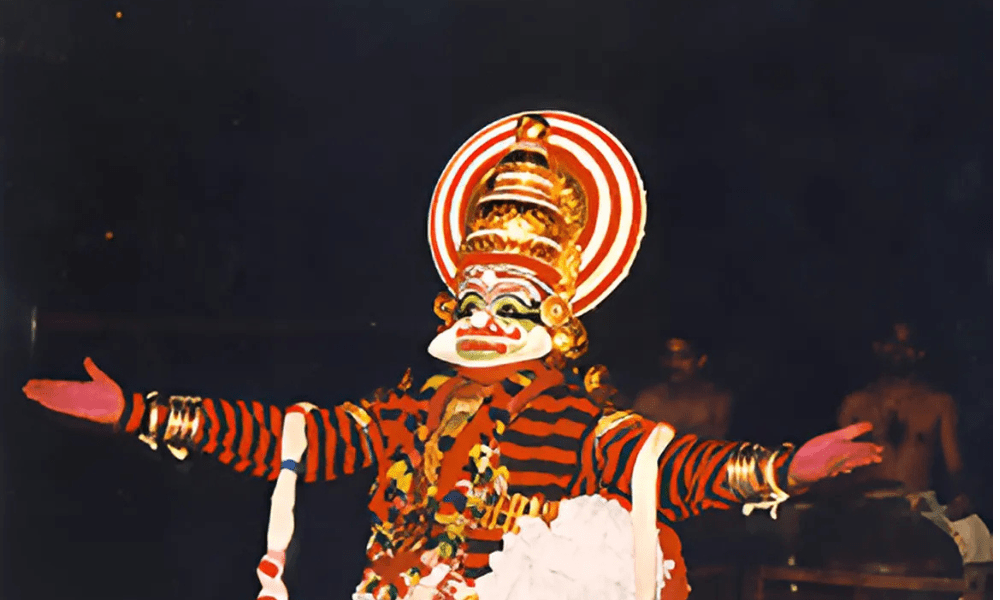
Costumes and Makeup: The vibrant costumes and symbolic makeup are integral to the performance, with each color and pattern carrying specific meanings. These elaborate outfits help distinguish characters, whether they are heroic, demonic, or divine, and can take hours to prepare.
-
Musical Accompaniment: The rhythmic beats of the mizhavu drum, played by Nambyar men, and the clash of cymbals by Nangyar women, create a powerful, hypnotic soundscape that enhances the performance’s dramatic effect.
The Language of Tradition: Bridging the Sacred and the Accessible
Sanskrit and Malayalam: A Harmonious Blend
At its core, Koodiyattam is performed in Sanskrit, connecting it to India’s ancient literary and philosophical traditions. However, to engage a broader audience, segments in Malayalam were introduced over the centuries. These parts, often humorous or explanatory, help bridge the gap between the sacred Sanskrit text and the lay audience, making the profound themes more accessible to all.
The Role of Communities
Historically, Koodiyattam has been preserved and performed by the Chakyar and Nambiar communities of Kerala. The roles were strictly demarcated: male characters were portrayed by Chakyar men, while female roles were the domain of Nangyar women, who also played the cymbals. This hereditary system ensured that the intricate techniques and traditions were passed down with precision and dedication.
Global Recognition: A Living Legacy
UNESCO’s Endorsement
In recognition of its cultural and historical significance, UNESCO declared Koodiyattam a Masterpiece of the Oral and Intangible Heritage of Humanity. This acknowledgment underscores the importance of preserving and promoting this ancient tradition as a global cultural treasure.
The Cultural Significance of Koodiyattam
Today, Koodiyattam is more than a relic of the past; it is a vital, living art form that continues to thrive. It stands as a preserved temple ritual, a cornerstone of Kerala’s cultural identity, and a direct, unbroken link to the theatrical arts of ancient India. In a rapidly changing world, the survival and practice of Koodiyattam is a testament to cultural devotion, keeping the flame of an ancient art form burning brightly for future generations to witness and appreciate.
Conclusion: The Enduring Spirit of Koodiyattam
Koodiyattam is not merely a performance; it is a profound cultural expression that has withstood the test of time. Its intricate blend of drama, dance, music, and ritual offers a unique glimpse into the spiritual and artistic heritage of India. As audiences continue to be captivated by its timeless beauty and depth, Koodiyattam remains a vibrant testament to the enduring power of cultural traditions, inviting us all to partake in its ancient conversation with history.