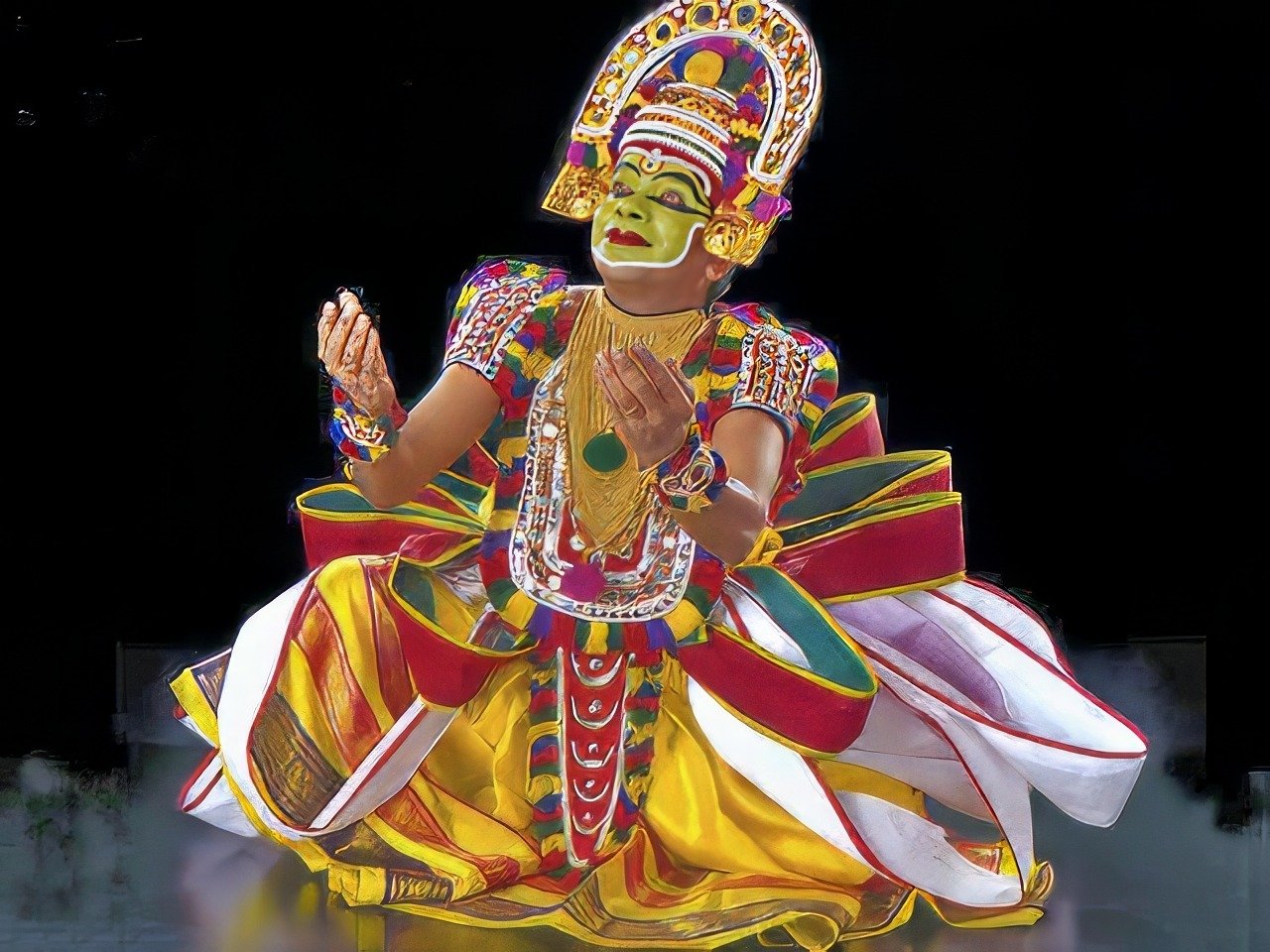
Discover Ottan Thullal: Kerala’s Vibrant Dance of Satire and Storytelling
In the culturally rich landscape of Kerala, India, a unique and vibrant art form stands out with its colorful display of rhythm and satire. Known as Ottan Thullal, this solo performance art seamlessly blends dance, poetry, and social commentary, captivating audiences with its humor and high-energy storytelling. Originating in the 18th century, Ottan Thullal was born out of creative rebellion and continues to be a powerful voice for the people.
From a Public Jest to a People’s Art
Every art form has its origin story, and Ottan Thullal’s is both intriguing and inspiring. It was conceived by Kunchan Nambiar, a celebrated Malayalam poet and satirist. According to legend, Nambiar was once a percussionist for a Chakiyar Koothu performance, another traditional art form of Kerala. During a performance, he dozed off and was publicly mocked by the lead performer. Rather than succumbing to shame, Nambiar turned his embarrassment into innovation. In an act of creative defiance, he crafted a new performance style that was more accessible and relatable to the common people. Thus, Ottan Thullal was born—an art form that spoke the language of the masses and reflected their everyday lives.
What Makes a Thullal Performance Unforgettable?
Ottan Thullal is a solo performance, yet it fills the stage with its energetic presence. The artist is a master of multiple disciplines: dance, singing, and storytelling. Here’s what makes each performance unforgettable:
Sharp Social Critique
At its core, Ottan Thullal is a vehicle for satire. The performer uses humor, wit, and sarcasm to comment on social absurdities, political follies, and human vanities. This tradition of using comedy to speak truth to power is a cornerstone of the art form.
Vibrant Presentation
A Thullal artist is a visual spectacle. The costumes are colorful, and the makeup is expressive, with exaggerated gestures that make the narrative clear even to those unfamiliar with the story. This visual flair ensures the performance is always engaging and easily understood.
A Rhythmic Heartbeat
The performer is supported by a small ensemble of musicians playing traditional instruments like the mridangam (a barrel-shaped drum), the idakka (an hourglass-shaped drum), and ilathalam (cymbals). These instruments provide a dynamic rhythmic foundation for the dance and recitation, enhancing the overall experience.
Grounded in Tradition
While revolutionary in its approach, Ottan Thullal draws its core principles from the Natya Shastra, the ancient Indian treatise on the performing arts. This connection to a deep classical lineage adds to its richness and depth.
The “Kathakali of the Poor Man”
Kunchan Nambiar’s primary goal was to democratize art. During his time, many classical performances like Kathakali and Chakiyar Koothu were steeped in complex Sanskrit texts and intricate, stylized rules, making them inaccessible to the average person. Ottan Thullal broke down these barriers. Nambiar crafted his verses in simple, everyday Malayalam, ensuring that his stories and their humorous critiques were understood by all. This grassroots appeal earned it the nickname “Kathakali of the poor man,” reportedly coined by former Indian Prime Minister Jawaharlal Nehru. This title highlights its role as a powerful, expressive art form that belongs not just to the temples and palaces, but to the people in the streets.
While Ottan Thullal is the most popular, it is one of three varieties of Thullal. The other two, Seethankan Thullal and Parayan Thullal, differ in their tempo, costume style, and performance methods, offering a spectrum of storytelling within the same tradition.
The Enduring Legacy of Laughter and Truth
Today, Ottan Thullal remains a vital part of Kerala’s cultural identity. It is a staple at temple festivals and is often featured in arts competitions, where a new generation of performers keeps the tradition alive. Its purpose has also evolved with the times; modern performances are sometimes used to spread awareness and deliver social messages on contemporary issues.
More than just an art form, Ottan Thullal is a symbol of resilience and ingenuity. It stands as a testament to the idea that art can be both profound and popular, classical and critical. It remains a powerful reminder that sometimes, the sharpest critiques come wrapped in the most vibrant colors, delivered with a rhythm you can dance to and a punchline that resonates for centuries.
Conclusion
Ottan Thullal is not merely a performance; it is a cultural phenomenon that continues to thrive in Kerala’s artistic landscape. Its ability to entertain while delivering poignant social commentary makes it a timeless art form. As it continues to evolve and adapt to modern times, Ottan Thullal remains a vibrant testament to the enduring power of art as a vehicle for social engagement and commentary. Whether you encounter it at a temple festival or a competitive stage, the laughter and insights of Ottan Thullal are sure to leave a lasting impression, reminding us of the power of humor and storytelling in connecting people across generations.