The Flavors of Kerala: A Culinary Journey Through India’s Spice Coast
Imagine stepping into a traditional Kerala kitchen, where the air is filled with the tantalizing aroma of mustard seeds crackling in hot oil and the fresh scent of curry leaves. Nestled on India’s lush Malabar Coast, Kerala is a land where culinary traditions are as rich and varied as the landscapes. The region’s cuisine is a testament to its tropical geography, abundant coastlines, and a storied history of trade and cultural exchange. This article delves into the essential ingredients, iconic dishes, and historical influences that make Kerala’s cuisine one of the most celebrated in India.
Core Ingredients: The Foundation of Kerala Cooking
Rice and Coconut: The Staples
Central to Kerala’s culinary identity are rice and coconut, two ingredients that appear in myriad forms throughout the region’s dishes. Rice is a staple, serving as the foundation for everything from breakfast items to lavish festival spreads. Meanwhile, coconut is used with remarkable versatility—its oil for frying, milk for creamy gravies, and grated flesh as a garnish or integral component of many side dishes.
A Symphony of Spices
Kerala’s cuisine is renowned for its intricate spice blends, which create layers of flavor rather than overwhelming heat. Key spices include:
- Curry Leaves: Fresh and aromatic, they are often the first to hit the pan.
- Mustard Seeds: Known for their nutty flavor, they add depth to many dishes.
- Fenugreek and Asafoetida: These lend a subtle bitterness and umami.
- Chillies: Used for heat and color, both fresh and dried varieties are common.
- Cardamom, Cinnamon, and Cloves: These spices add warmth and complexity, often used in both savory and sweet dishes.
The art of spice usage in Kerala is about balance, with each ingredient playing a specific role to enhance the overall dish.
Signature Dishes: A Taste of Tradition
Puttu and Kadala Curry
One of the quintessential Kerala breakfasts, Puttu is a cylindrical steamed cake made from ground rice and coconut. It is traditionally paired with Kadala Curry, a robust and aromatic black chickpea stew cooked in a spiced coconut gravy. This combination is a perfect example of how simple ingredients are elevated through expert seasoning and cooking techniques.
Appam with Stew
Appam are delicate, bowl-shaped pancakes made from fermented rice batter, characterized by their soft, fluffy centers and crispy edges. They are often served with a coconut milk-based stew, which can include chicken, mutton, or vegetables. This dish reflects Kerala’s historical ties to European traders, who influenced the development of certain stews.
Karimeen Pollichathu
A beloved coastal specialty, Karimeen Pollichathu features pearl spot fish marinated in a mix of spices and chillies, then wrapped in banana leaves and grilled. The banana leaf not only keeps the fish moist but also imparts a unique, smoky flavor, making this dish a must-try for seafood lovers.
Sadhya: The Grand Feast
A Vegetarian Celebration
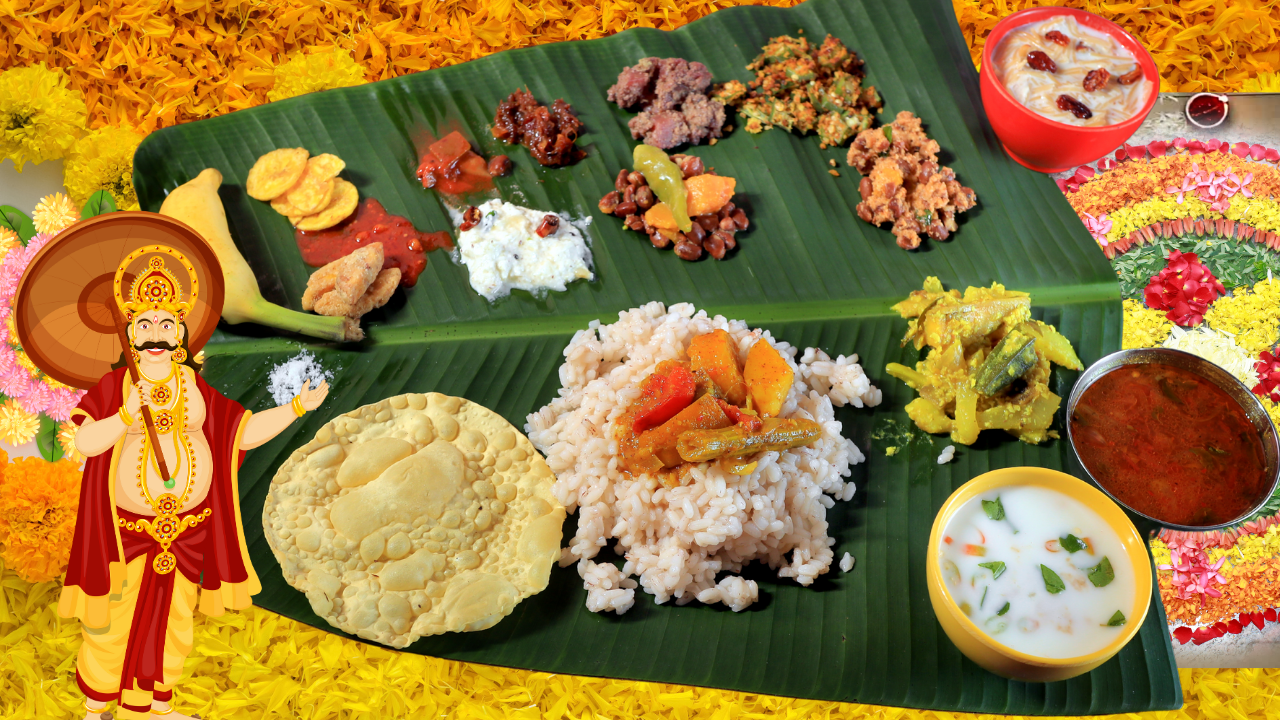
The Sadhya is a grand vegetarian feast traditionally served on banana leaves during festivals and special occasions. It is not just a meal but a cultural experience, consisting of an array of dishes meticulously arranged on the leaf. Common components include:
- Thoran: A stir-fried vegetable dish with coconut.
- Avial: A mixed vegetable curry with coconut and yogurt.
- Pappadam: Crispy lentil wafers.
- Pickles: Providing tangy and spicy notes.
- Payasam: A sweet pudding made with rice, milk or coconut milk, and jaggery.
Despite the vegetarian nature of Sadhya, it is a misconception that Kerala cuisine is predominantly vegetarian. The state’s diverse religious demographics mean that meat and seafood are integral to many diets, with dishes like Meen Curry (fish curry) and Prawn Moilee frequently gracing tables.
Historical Influences: A Tapestry of Cultures
The Impact of Trade
Kerala’s strategic location on the spice route has made it a melting pot of cultural influences. Arab, Chinese, and European traders—particularly the Portuguese and Dutch—introduced new ingredients and cooking techniques. This historical exchange is evident in Kerala’s use of spices, the adoption of baking, and the creation of certain stews.
Regional and Community Variations
Kerala’s cuisine is not monolithic; it varies significantly across regions and communities. Coastal areas are known for their seafood-rich dishes, while the highlands boast meals featuring local spices and tubers. The culinary traditions of Hindu, Christian, and Muslim communities each contribute unique flavors and preparations, adding to the rich tapestry of Kerala’s food culture.
Conclusion: A Diverse Culinary Landscape
Kerala’s cuisine is a celebration of its natural bounty, historical influences, and diverse cultural heritage. It is a collection of distinct yet interconnected food traditions, all unified by a shared love for coconut, rice, and the aromatic spices of the Malabar Coast. Whether you’re savoring a simple breakfast of Puttu and Kadala or indulging in the elaborate Sadhya, each dish tells a story of the land and its people. To experience Kerala’s cuisine is to embark on a flavorful journey through its vibrant history and rich culinary landscape.