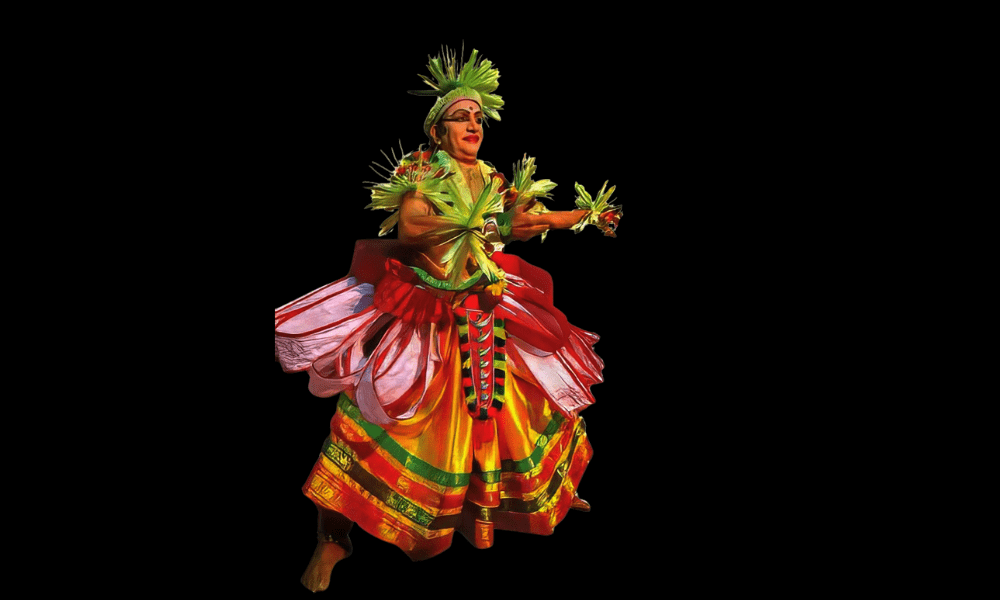
Kunchan Nambiar’s Ottan Thullal: A Revolutionary Blend of Satire and Performance
In the vibrant world of Indian performing arts, few creations have left a mark as profound as Ottan Thullal. Emerging from the lush cultural landscape of 18th-century Kerala, this satirical art form was the brainchild of Kunchan Nambiar, a poet whose personal experience of public embarrassment sparked a creative revolution. Ottan Thullal, with its unique fusion of humor, dance, and music, became a powerful tool for social critique, offering a fresh and engaging way to reflect on societal issues.
The Birth of Ottan Thullal: A Personal Catalyst
The origins of Ottan Thullal are rooted in a pivotal moment of personal humiliation for Kunchan Nambiar. While performing as a Mizhavu drummer during a Chakyar Koothu—a traditional temple art—Nambiar accidentally dozed off. This lapse did not go unnoticed. The Chakyar, the main performer, seized the opportunity to ridicule him in front of the audience. Rather than retreating in shame, Nambiar channeled his embarrassment into creativity, crafting Ottan Thullal as a direct response.
The very next day, Nambiar unveiled his creation in the same temple, captivating audiences with its novelty and energy. This act of artistic defiance not only drew spectators away from the established Chakyar Koothu but also set the stage for a new cultural phenomenon in Kerala.
Breaking Barriers: An Art Form for the People
Before the advent of Ottan Thullal, Kerala’s classical arts were predominantly elitist, often performed in a Sanskritized version of Malayalam that was inaccessible to the average person. This linguistic barrier limited the audience’s engagement and understanding.
Nambiar revolutionized this dynamic by composing his Thullal performances in colloquial Malayalam. This choice democratized the art form, making it relatable and understandable to the common man. By using everyday language, Nambiar ensured that his messages resonated deeply with his audience, allowing them to see themselves and their society reflected in his performances.
The Power of Satire: A Mirror to Society
At its core, Ottan Thullal served as a mirror to society, using satire to expose and critique its flaws. Nambiar’s performances were rich with sarcasm and irony, targeting a wide array of societal issues:
- Hypocrisy: He highlighted the double standards of those in power, unmasking the moral pretenses of religious and social leaders.
- Corruption: Nambiar frequently addressed the greed and dishonesty prevalent among officials and landlords.
- Social Flaws: His sharp observations extended to the absurdities of social customs, class hierarchies, and human behavior, lampooning arrogance and laziness.
By wrapping his critiques in humor, Nambiar delivered biting social commentary without alienating his audience. The laughter he evoked made his insights more palatable, encouraging self-reflection and awareness among spectators.
A Legacy of Laughter and Insight
Kunchan Nambiar’s creation of Ottan Thullal was not merely an artistic innovation; it represented a democratization of social commentary. The art form’s immense popularity underscored a public hunger for entertainment that was not only engaging but also relevant and fearless in its critique.
Today, Nambiar is celebrated as a pioneering poet and satirist. His legacy, Ottan Thullal, remains a cornerstone of Kerala’s rich literary and performing arts tradition. It continues to serve as a potent vehicle for satire and sarcasm, proving that humor can be a powerful medium for delivering serious messages. Through Ottan Thullal, Nambiar demonstrated that sometimes the sharpest critiques are best delivered with a smile and a well-aimed joke.
The Impact of Language and Humor
Nambiar’s decision to use colloquial Malayalam was pivotal in ensuring the accessibility of Ottan Thullal. By breaking away from the traditional, formal language of classical arts, he opened up new avenues for storytelling and expression. This linguistic choice not only made the performances more relatable but also allowed for a broader range of humor and wit.
The humor in Ottan Thullal is not merely for entertainment; it serves as a vehicle for deeper reflection. By using comedy to address serious topics, Nambiar was able to engage his audience on multiple levels, prompting them to think critically about the world around them.
Conclusion: The Enduring Relevance of Ottan Thullal
Kunchan Nambiar’s Ottan Thullal stands as a testament to the enduring power of satire and performance. Its ability to engage, entertain, and enlighten audiences has ensured its place as one of Kerala’s most cherished cultural traditions. Through his innovative use of language and humor, Nambiar not only created a new art form but also provided a platform for social critique that remains relevant to this day.
As we reflect on the legacy of Ottan Thullal, it is clear that Nambiar’s work transcends mere entertainment. It is a reminder of the power of art to challenge, provoke, and inspire change, proving that even in the face of adversity, creativity can transform personal setbacks into cultural triumphs.